“Hey, Eva! Someone told me my Human Design View (or is it called Perspective?) shows how I’m meant to see the world. What the heck does that even mean??”
Ahh, welcome to my favorite Human Design rabbit hole: The Variables. 🐇
See those four arrows (⬅️➡️) near the top of your Human Design Chart?
Your Human Design View Variable–sometimes also called Perspective, or View Perspective–is represented by the bottom right arrow.
In this article, I’m going to show you where to find your View (Perspective) Variable information, how to interpret it, and how to use it to support yourself in becoming the unique human being you were always meant to be.
What Is The View (Perspective) Variable in Human Design?
Your Perspective (View) Variable in Human Design shows you how you are designed to take in information + describes the lens through which you see the world.
Are you designed to focus on the details… Or zoom out to look at the bigger picture?
Do you see the world as full of wonderful possibilities–or are you more of a “let’s calculate the most likely outcome” sort of person?
^^ Knowing what your unique POV is meant to be can be really freakin’ helpful when you find yourself getting lost in other people’s ideas, opinions, and expectations.
In addition to that, Perspective is a part of a bigger Human Design concept called “The Four Transformations,” which posits that:
- If you nourish yourself correctly (Determination Variable), and
- Put yourself in supportive physical spaces (Environment Variable), and
- Allow yourself to see things the way you were meant to (View Variable)
… You will unlock the fourth and final transformation called “Awareness” (Motivation Variable), where your unique way of conceptualizing will become a source of power & inspiration for other people.
So. Freakin’. Cool. 🤯
How To Find Out Which View (Perspective) You Have
If your preferred chart generator doesn’t include Variable information (many don’t!), try using the Neutrino Design App website.
While some features (e.g., detailed descriptions of each of your “placements”) are locked behind the subscription, you should see the name of your View (Perspective) Variable arrow on the right of your chart:

You can also learn how to figure this out based on the numbers attached to the bottom right arrow at the top of your chart…
… But (IMHO) you don’t really need to mess with that unless you’re thinking about pursuing Human Design professionally. 😉
Focused View (Left) Perspective vs Peripheral (Right) View Perspective
The first thing we want to look at is the direction of your View (Perspective) arrow (= the bottom right arrow near the top of your Human Design chart).
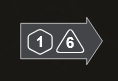
If the bottom right arrow is pointing LEFT ⬅️, you have a Focused View.
Your mind works better when you press the “Zoom In” button and focus on the details of the task in front of you.
When asked “How was your day?”, you may find yourself sharing a lot of detail about one or two specific things that happened to you (= the focal points of your day).
You may also be a biiiiit more prone to hyperfocus than your Peripheral View peers. Remember to grab a glass of water before looking at that spreadsheet, okay?
If the bottom right arrow is pointing RIGHT ➡️, you have a Peripheral View.
Your mind works better when you press the “Zoom Out” button and look at the big picture.
When asked “How was your day?”, you may find yourself describing the overall “vibe” of the day without being able to recall any specifics.
(“Lunch was great, Mom! Umm… What did we have? I… I think there was some kind of soup?”)
You may find yourself easily distracted by visual clutter in your space (= in your field of vision). Taking five minutes to organize your workspace before you begin can be really helpful for you.
Is Focused View Better Than Peripheral View?
Heck no.
You may notice that our society tends to place more value on having a Focused (Left) Perspective…
But we absolutely need BOTH ways of seeing in the world if we are going to grow and thrive on this silly little rock we call home.
The 6 Human Design Views (Perspectives)
Survival
If you have Survival View in Human Design, you are designed to see things through the lens of your own survival.
You have an innate gift for noticing things that will ensure your survival as an individual, as well as those that will threaten or jeopardize it.
Your focus is on meeting your basic needs first and foremost, which can sometimes make you appear a bit selfish to others. This is a feature, not a bug.
“How will this help me survive?” is one of the big questions your mind naturally asks. “How can I protect myself in this situation?” is another.
(Due to your impeccable threat awareness, this Perspective can give you a natural insight into what people are afraid of. You’ll use this power for good… Right? 😈)
Possibility
If you have Possibility View in Human Design, you are designed to see things through the lens of “anything is possible.”
You have a gift for recognizing the potential of any given situation, no matter how challenging it may seem at first.
Someone lost their job? Oh wow, it could lead them to start their own business! And get on the cover of Forbes! And become a multi-millionaire! Or they could meet the love of their life while at their next job interview! Or, or, or…
Where others see nothing but an empty plot of soil, you see hundreds of seeds just waiting to be planted. 🌱
^^ That said, you don’t really have a reliable way of evaluating whether any of these possibilities will come true. So try not to place too much pressure on what you see, alright?
Expectations narrow your field of vision, and your genius requires you to stay open to every possibility.
Power
If you have Power View in Human Design, you are designed to look at life through the lens of power.
Who has power? Who doesn’t? Who is the best at this particular skill? Who is the worst? Who will come out on top if these two get into a fight? What are the hierarchies at play here?
Keeping score–in life, in business, in relationships–is second nature to you. You see the winners and losers in every situation, and know exactly who to bet on to make your money back tenfold. 💰
If used correctly, this View can be excellent for learning how to manipulate the material plane and setting others up for material success.
Wanting
If you have Wanting View in Human Design, you are designed to look at life through the lens of “what do my people need to thrive?”
Or, more specifically…
“What are my people missing… And what are the broader systemic issues preventing them from having those things?”
Where the Survival View focuses on their own needs first and foremost, the Wanting View expands that focus to their community.
And while your Survival cousins remain laser-focused on meeting their immediate needs (food, water, shelter), YOU are meant to take a much broader view, noticing the gaps in existing structures and figuring out how to fill them.
Probability
If you have a Probability View in Human Design, you are designed to look at life through the lens of probability.
Instead of saying “Look at all these possibilities!”, you tend to ask: “Okay, but what’s the most likely outcome here?”
This is a very pragmatic, grounded way of seeing the world. You have a gift for pattern recognition which allows you to sense when a new idea has taken root (and is about to become universally recognized).
The phrase “I knew this would happen” is frequently at the tip of your tongue.
However, be careful not to mistake your assessment of the situation for the absolute truth. You are not infallible, and sometimes your mind can slip into “wishful thinking mode” without you even noticing.
Personal
If you have Personal View in Human Design, you are designed to see things through the lens of your own experience.
Living with a Personal View can be a very strange–and sometimes isolating–experience. Unlike the other Views, you are not actually looking at the world around you all that much.
Instead, your eyes are pretty much glued to your own paper, often at the cost of social niceties like keeping up with the office gossip.
Sometimes it feels like all you’re doing is watching yourself do things, almost as if you are an alien researcher dedicated to understanding The Experience of Being Human.
The funny thing is, you may not know the name of the Prime Minister of your country, or why Annie got called into HR yesterday…
But people will still come to you to get your opinion on things (even if you’re not that interested in the answer yourself).
Your Perspective vs Your Distraction
You will not be able to maintain your unique Perspective 100% of the time.
Sometimes your mind will slip into what we call “Distraction”: a way of seeing the world that feels strangely familiar… But isn’t actually the correct one for you.
(Human Design calls this phenomenon “false resonance.” You know it isn’t right for you, but you just can’t ignore the siren call.)
Each View (Perspective) has its own Distraction, listed in the table below.
| View/Perspective | Distraction | How it manifests |
| Survival | Wanting | Worrying about the wants & needs of other people before your own immediate material needs have been met |
| Possibility | Probability | Chasing certainty; choosing “the sure thing” instead of staying open to the possibility of something better |
| Power | Personal | Becoming overly focused on measuring YOUR personal experience against others (rather than looking at the broader power dynamics at play) |
| Wanting | Survival | Fixated on finding short-term solutions for immediate material necessities; treating symptoms instead of addressing the root cause |
| Probability | Possibility | Slipping into wishful thinking; mistaking probability for absolute truth; compulsive gambling |
| Personal | Power | Becoming entangled in other people’s affairs; personally invested in figuring out who the winners & losers will be |
This is not a pattern you need to eliminate. Simply noticing when it happens is enough. ❤️
How to Experiment With Your View in Real Life
You can’t really force yourself to have the “correct” Perspective.
It’s something that will unfold naturally when you are feeding your brain correctly (= according to your Digestion Variable) and operating in a supportive environment (= as described by your Environment Variable).
What you can do, however, is notice yourself slipping into Distraction.
The moment you see it is the moment it loses its power over you; the grip of the Not Self loosens, allowing you to come back to yourself one moment of awareness at a time.
Your Perspective Variable In Business
There’s been a lot of talk in the online business community about developing a unique Point of View (POV) to stand out from the crowd.
In a business sense, it can help you figure out why some content types, hooks, or other “sharing” strategies might come more naturally to you.
For example, someone with Possibility View may find it easier to create inspirational, “everything is possible!!” content–because that is how they literally see the world around them.
My Experience With My Human Design View (Perspective)
Peripheral View
I have a Peripheral View in Human Design, which means that I’m designed to “zoom out” and focus on the big picture, rather than the details.
Growing up, this would drive my family nuts.
I would come home after school, and they would try to pull me into conversation by asking me HIGHLY specific questions about my day.
“What was your teacher wearing today?” “Uhh… How would I know that?”
“What did you have for lunch?” “There was… Soup? I think?”

I could never give them a satisfying answer, which led to a lot of very frustrating experiences for both sides.
I wasn’t trying to be a surly teenager (or an equally surly 10-year-old); I just didn’t have the answers they were seeking because I was paying attention to different things.
Survival View
Ahh, yes. Survival. Focusing on my own basic needs before trying to make other people happy. Riiiiiight.
My people-pleasing tendencies are not happy about this one, and I find myself slipping into Distraction (Wanting View) more than I would like.
Let’s call this part of my deconditioning a work in progress, alright?
Human Design Perspective Variable FAQ
Where can I find out what my View/Perspective Variable is?
The Neutrino Design App website will give you all your Variable information for free, including your Perspective/View info.
Wait, so is this thing called Perspective or View?
I believe that the original name for this Variable was “View”; however, the founder of Human Design seems to use both terms in his work, especially when talking about The Four Transformations.
Where does the View Variable information come from? How is it calculated?
Your View (Perspective) Variable is determined by looking at the North & South Node placements on the Conscious (Personality) side of your Human Design chart.
What if I don’t resonate with my View (Perspective)?
Your Variable information is very sensitive to birth time. Make sure your birth time is accurate (e.g., by checking out your hospital records) before exploring this particular rabbit hole.
Where can I learn more about my Human Design Perspective (View)?
You will want to look into resources related to what Human Design calls “Rave Psychology”, such as the Rave Psychology: External Color book by IHDS.
Is all of this info Ra-approved?
Mostly? I would say that 80% of the Human Design knowledge in my brain comes from what I would consider “primary sources” on the subject (IHDS & Jovian). That said, I obviously have my own perspective (ha, get it? perspective!!) on things, too.
Where to Learn More About Your Variables
I’m currently working on a series on all four Human Design Variables (and their respective Transformations).
The first three installments are already up, with the fourth one coming your way soon:
- Human Design Determination 101
- Human Design Environment 101
- Human Design View 101 (what you’re reading right now)
- Human Design Motivation 101 (coming soon)
If you are looking to explore other sources of information, you will want to look for resources that mention PHS (Primary Health System) (for Determination & Environment) and Rave Psychology (for Perspective & Motivation).
An Invitation to Respond To–In Your Own Time
If you made it this far into the article, I really think you should book a 1:1 Human Design reading with me.
(Yep, that’s it, that’s the pitch today. See you on Zoom, friend. 😉)