“Hey, Eva… What is this Human Design Motivation thing I keep hearing about? Is it literally about how I motivate myself to get stuff done?”
Well… It can be.
But it’s also a liiiiittle bit more complicated than that.
Even though I’ve been studying Human Design for 6+ years now, I sometimes still struggle to put the concept of Motivation into words… Which is one of the biggest reasons why I wanted to write this article in the first place.
If you want to find out how I think about each of the 6 Human Design Motivations–as well as where to find out what your Motivation is–keep on reading. 😉
What Is The Motivation Variable in Human Design?
Your Motivation Variable describes the underlying drive that moves you to make a contribution to the world around you through your actions and insights.
It is represented by the top-right arrow ⬅️➡️ on your Human Design chart.
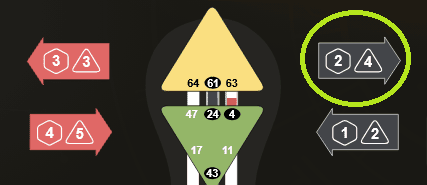
There are 6 Motivations total: Fear, Hope, Desire, Need, Guilt, and Innocence.
Are you driven to find the optimal solution to a problem by researching & analyzing every aspect of the situation at hand (Fear Motivation)?
Or are you moved into action because your mind naturally sees all the things that need fixing around you (Guilt Motivation)?
Let’s find out.
How To Find Out Your Motivation in Human Design
Step 1: Head to the Neutrino Design App website.
Step 2: Input your birth information into their free chart generator.
Step 3: Find the Motivation section on the right of your chart.

Step 4: Keep going down the HD rabbit hole with the rest of us. 🐇
Psst: Why Your Motivation Variable Matters (Like, A Lot)
Your Motivation is a part of a bigger Human Design concept called “The Four Transformations”, which posits that:
- If you nourish yourself correctly (Determination/Digestion Variable), and
- Give your body a supportive physical space to exist in (Environment Variable), and
- Allow yourself to see things in your own unique way (View/Perspective Variable)
… You will unlock the fourth and final Transformation called “Awareness” (represented by the Motivation Variable), which will turn your mind’s unique way of conceptualizing into a source of power & inspiration for other people.
In other words, this Variable is not really about you anymore–but rather how your insights become a gift to the world around you.
Your Motivation vs Your Transference
The tricky thing about Motivation is that, no matter how much “work” you put in, you’re never going to be able to maintain this state 100% of the time.
That is okay. In fact, that is by design.
You’ll find that sometimes your mind will slip into your Transference: a way of thinking about the world around you that makes you feel “off” for one reason or another.
The Transference of each Motivation is listed in the table below:
| Motivation | Transference |
| Fear | Need |
| Hope | Guilt |
| Desire | Innocence |
| Need | Fear |
| Guilt | Hope |
| Innocence | Desire |
The Motivation Variable is not so much about “doing” as it is about simply letting your mind become what it was always designed to become.
Therefore, when you find yourself in Transference, your only job is to notice it (and maaaaaybe see if you can gently guide your mind back to its natural state).
(I recommend reading the blurbs for both your true Motivation and your Transference below. ⬇️)
The 6 Human Design Motivations (And What They Mean For You)
Fear
If you have Fear Motivation in Human Design, you are driven to eliminate your fear of the unknown by eliminating your ignorance.
Research. Analyze. Get to the bottom of things. Pick apart the unknown until it loses its power over you.
Then act.
And remember: fear is not your enemy. It’s the driving force that pushes you to dig deeper than other people would, see things from all angles, and uncover solutions your peers would not have thought of.
Transference: Need
When in Transference, your investigative drive turns into a strange, all-encompassing Need to take some sort of immediate action.
All of a sudden, everything feels urgent, and Time itself seems to be conspiring against you.
“I need to do this right now”
“I need to share this right now”
^^ If you let these thoughts take over, you will find yourself overlooking crucial information and missing out on a potentially game-changing solution to your problem.
Hope
If you have Hope Motivation in Human Design, you are driven to uplift and inspire others through your optimistic, “glass half full” approach to life.
You have the unique ability to see hope and possibility in situations where others see nothing but peril.
When operating correctly, you have a strong sense of “everything will work out exactly as it’s supposed to”… Even if there seems to be little evidence to support it.
You also know that more action isn’t always the right answer, and that there’s wisdom in waiting for things to unfold without your direct interference.
Transference: Guilt
When in Transference, your hopeful outlook turns into a sense of crushing Guilt instead.
You begin to fixate on everything that is wrong with the world, and feel compelled to take more and more action to fix it.
“I need to fix this right now”
“If I don’t fix this, nobody else will”
^^ If you let these thoughts take over, you will soon find yourself feeling completely burnt out by the constant fixing and problem-solving.
Desire
If you have Desire Motivation in Human Design, you are driven by a desire to impact the material world through your leadership.
You are designed to be ambitious: to set goals that match your desires, and to go after them with everything you’ve got.
Sitting on the sidelines is not for you; you need to actively participate in the creation of your life by exploring new territories, trying things, and getting your hands dirty.
Own your desires. Make a plan. And go make your mark on the world. M’kay?
Transference: Innocence
When in Transference, you refuse to take responsibility for your desires, and may even try to shut them down completely in the name of being a “good person.”
“I can get by without that”
“Making money is not spiritual”
“Whatever is meant to be will be”
^^ If you let these thoughts take over, you will find yourself feeling depressed and directionless (like a sad little balloon floating above the life you used to love).
Need
If you have Need Motivation in Human Design, you are driven by the need to take care of the bare necessities first and foremost.
You are a practical, resourceful problem solver who prefers to focus on the next right action (rather than attempting to make a 55-page plan for every possible future).
When operating correctly, your mind will focus on a few specific things that absolutely need to be done, and will not tolerate any extraneous “fluff” in your to-do list (or your mental landscape).
Transference: Fear
When in Transference, you may find yourself worrying about All The Things That Could Possibly Go Wrong in any given situation.
“But what if this happens”
“I haven’t researched this enough”
“I need to think about this more before taking action”
^^ If you let these thoughts take over, you will find yourself feeling paralyzed by fear, unable to take any meaningful action towards the security you so crave.
Guilt
If you have Guilt Motivation, you are driven by a desire to fix what is broken.
When you look at the world around you, your mind naturally identifies things that need fixing, improving, or correcting.
Combined with your strong sense of responsibility (“well, if no one else is fixing it…I guess I’ll have to”) and your knack for figuring out practical solutions for impossible problems, this Motivation truly makes you a force to be reckoned with.
Transference: Hope
When in Transference, you may find yourself engaging in “burying your head in the sand” behaviors while desperately hoping that someone else will fix things in your place.
“Everything will work out like it’s supposed to”
“I’ll just do this money meditation to pay my bills”
“I’m sure someone else will figure out a solution to this crisis”
^^ If you let these thoughts take over, you will find yourself avoiding responsibility to an alarming extent, often to the detriment of your dreams and aspirations.
Innocence
If you have Innocence Motivation, you… Don’t really have a consistent “drive” in the traditional sense of the word. 😀
You are designed to move through life by following your curiosity rather than a specific goal or agenda; to observe and explore the world around you without judgment (kind of like an innocent child being introduced to the wonders of the world for the first time).
Your talent for seeing things as they truly are will make you a very interesting resource (and potentially even a role model) for other people.
Transference: Desire
When in Transference, you may find yourself trying to push and shove your way towards the reality you want to experience.
“I need them to listen to me”
“We need to do things this way”
“I need to accomplish XYZ by the time I’m 35”
^^ If you let these thoughts take over, you will find yourself missing out on the childlike wonder that makes life so delightful for you (and makes your POV so intriguing to other people).
How to Work With Your Human Design Motivation
Uhh, “work with” might not be the right phrase to use here. 😬
Unlike your Digestion and your Environment Variables, you actually have very little control over how your Motivation Variable manifests.
The best you can really do is be aware of it–and notice if you start slipping into your Transference a little too often.
In a way, understanding your Motivation and Transference can serve as a check-in point for the other Transformations.
If you find yourself spending all of your time in Transference, ask yourself:
- Am I feeding my brain correctly? (= Digestion Variable)
- Am I in a space that feels supportive to me? (= Environment Variable)
- Am I allowing myself to see things the way I’m meant to? (= View Variable)
^^ The answers to these questions will probably hold some clues about how your Design is currently operating.
My Experience With My Human Design Motivation
My Human Design Motivation is Guilt.
And oh boy, has it been a weird experience for me.
I’ve always felt a strong sense of duty towards the world around me (separate from my people-pleasing-eldest-daughter tendencies, #iykyk).
As a small child, I used to go around saying that I would grow up to “save” the world; as a young adult, I threw myself into every single social justice movement I stumbled upon, often to the detriment of my relationships (and my own sanity).
Then came the burnout.
I spent years oscillating between extreme-yet-unproductive feelings of Guilt and the shadow side of my Transference (Hope). My avoidance behaviors shot through the roof during this time, leaving me with a very clouded view of my life, my priorities, and (unfortunately) my finances.
As I’ve been experimenting with my Digestion and my Environment more and more, I’ve started to notice my relationship with Guilt shifting.
My ability to see what needs fixing is starting to feel like a gift again–perhaps because I no longer feel the need to fix EVERY problem I come across.
The assignment feels lighter.
(What’s your experience with your Motivation? I’d love to hear about it. I really miss the early days of blogging when we used to talk to each other in the comments.)
Human Design Motivation Variable FAQ
Where can I find out what my Motivation Variable says?
The Neutrino Design App website will give you all your Variable information for free, including the name of your Motivation Variable.
How is the Motivation Variable calculated?
Your Motivation Variable is calculated by looking at the Color of your Personality (Conscious) Sun placement.
What if I don’t resonate with my Motivation Variable?
Your Variable information is very sensitive to birth time. Make sure your birth time is accurate (e.g., by checking out your hospital records) before exploring this particular rabbit hole.
Where can I learn more about my Human Design Motivation?
You will want to look into resources related to what Human Design calls “Rave Psychology.”
Is all of this info Ra-approved?
I would say that 80% of the Human Design knowledge in my brain comes from what I would consider “Ra-approved sources” on the subject (IHDS & Jovian). That said, I obviously have my own way of working with this information, just like every other practitioner out there.
Where to Learn More About Your Variables
I actually have a fantastic article series about all 4 Human Design Variables, with more expanded ones coming your way soon.
You can check out the series here:
- Human Design Determination (Digestion) 101
- Human Design Environment 101
- Human Design View (Perspective) 101
- Human Design Motivation 101 (← what you’re reading right now)
If you are looking to explore other sources, you will want to look for resources that mention PHS (Primary Health System) (for Determination & Environment) and Rave Psychology (for Perspective & Motivation).
An Invitation to Respond To–In Your Own Time
If you’re looking to engage with your Human Design chart more deeply, I highly recommend booking a reading with someone you resonate with.
You can read about my approach to Human Design here, and book a reading riiiiiiiiight here. ❤️