“So, Eva… How the heck do I start learning Human Design as a complete beginner? It feels super overwhelming to me.“
Great question, my friend.
Human Design is an *annoyingly* complicated system with many moving parts.
It can be quite intimidating for beginners to learn, especially because the most accurate and trustworthy sources of information are not always newcomer-friendly.

Live footage of me trying to read through the Line Companion for the first time
In this piece, I’m sharing 3 different paths you can take to start learning Human Design as a complete beginner, as well as my own (rather unconventional) journey of becoming familiar with the system over the past five years.
How I Did It: My Journey of Learning Human Design
I first discovered Human Design sometime in 2020.
As a long-time astrology enthusiast, I was, of course, immediately fascinated by the system.
For the next five years or so, I spent a good chunk of my free time researching all the different aspects of my Human Design chart. I picked up some books, bought a few (*cough* too many *cough*) courses, and made myself a bunch of beautiful Notion databases to house all that newly acquired knowledge.
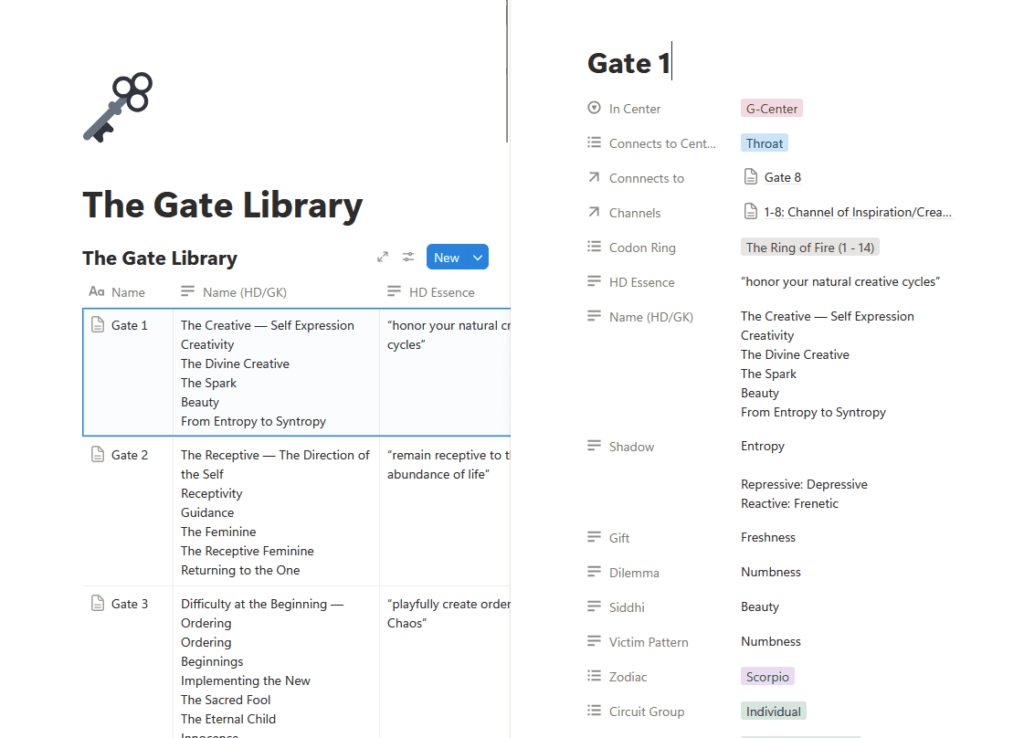
Umm, I’m sure this is just a casual hobby… Right? Right??
Then, in August 2025, I received a nudge to go deeper.
(Okay, a “nudge” might be a bit of an understatement here. There was a lot of crying that month. But more on that another time.)
It was one of those “you have to do this, or else” moments that you can’t really explain to other people.
So, after many teary-eyed money conversations with my unbelievably supportive husband, I took a step back from the copywriting business I had built over the last seven years, mosied my butt over to the International Human Design School’s website, and got to work.
And so began the studying–just not in the way I had expected.
You see, I knew I wanted to learn from people and organizations as close to the “source” as possible (IHDS and the Jovian Archive being the most reliable, IMHO).
But it quickly became clear to me that I wouldn’t be following a traditional learning path with either of them.🤷🏻♀️
Instead, what unfolded was one of the weirdest, most bizarre experiences of my life.
Every morning, I would wake up knowing exactly which piece of information I needed to pick up next–and where to find it. I couldn’t tell you what I’d be doing a week from now, but I always knew what the next right step was once I sat down at my desk in the morning.
(By the way, sometimes the next right step was turning off my computer and going outside to process what I had just learned until the next “clue” popped into my head.)
Looking back, I see this time as a perfect manifestation of the Generator mastery process.
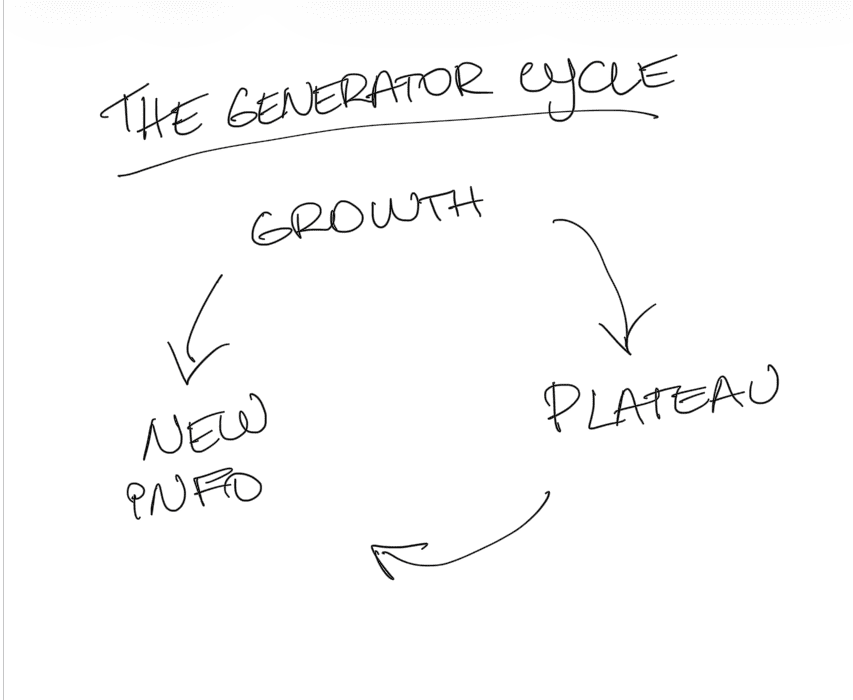
I had fully committed to this project by following my Sacral response, and my inner guidance system was doing a remarkable job leading me through every single stage of it (including the inevitable Generator “plateaus”).
(Or hey, maybe I’ve finally gone off the deep end and will look back on this post years from now in complete horror. Anything is possible.😉 #undefinedajnathings)
I spent 6 months weaving in and out of multiple different courses, books, and learning resources. My learning journey took me through all of the main topics typically covered in “traditional” Human Design courses–just not in the order I expected.
Why am I telling you this?
Because I want you to realize you can learn Human Design the way that works for YOU.
A lot of people will tell you to only focus on Strategy & Authority, and forget the rest. (How boring. 🙄)
Those same people will also tell you that “pop HD” is absolutely useless and should be avoided at all costs. (Meh, it’s a rite of passage. Ra’s original books and lectures are dense AF. Not everyone is ready for that.)
The way I see it, the entire system of Human Design is based on the idea of experimentation: trying things, seeing if/how they work, and not holding too tightly to any of the concepts.
And YOU are the one who gets to decide where to take your experiment next.
How to Start Learning Human Design As a Beginner
The Simple + Straightforward Approach of Learning Human Design
Perfect for you if: You want to learn the basic concepts of Human Design quickly + in a step-by-step manner.
This method is actually really simple.
All you have to do is pick up these 3 books (and read them, of course 😀):
- The Definitive Book of Human Design by Lynda Bunnell & Ra Uru Ha
- Human Design – The Revelation: A Guide to the Basic Concepts, Centres, Types and Definition by Richard Rudd*
- Human Design – Circuitry: The Complete Guide to Circuits, Channels, and Gates by Richard Rudd*
The first book will introduce you to the basic concepts of Human Design; the other two will reinforce the knowledge, expand on some of the material, and give you a few extra real-life examples to ponder as you go.
Once you’ve made your way through these books, you will have a basic understanding of the Human Design system, as well as plenty of avenues to explore going forward.
*Note: If you want to stay as close as possible to the Human Design “source material”, you can try replacing these with The Black Book of Human Design and The White Book of Human Design instead.
Make sure you have plenty of snacks + coffee on hand before you crack them open, though; they are not an easy read.
The “Choose Your Own Adventure” Approach to Learning Human Design
Perfect for you if: You want to follow your intuition, do what’s fun, and trust your own discernment about who is worth listening to.
So…. I’ve made you a list of 10 beginner-friendly Human Design concepts below.
Some of them are foundational to the system, while others could be considered more advanced.
However, all of them are still relatively accessible to a curious beginner who doesn’t mind furiously Googling things for a few hours.
(PSA: If you see the word “substructure” anywhere, you are no longer in beginner territory. Proceed at your own risk.)
Now, full disclosure: this is not the IHDS-approved way to learn things.
There’s a lot of conflicting Human Design information on the internet, and you will need a bucketful of intuition & discernment to wade through it.
And yet. And yet, and yet, and yet.
Sometimes we gotta do things our way, not the “right” way.
For me personally, the Profile piece was what made Human Design really “click” for me… And I did a LOT of research on Gates & Channels before feeling the pull to properly learn about the different types of Authorities.
Consider this your permission slip to look through this list, see which concept sounds the most fun to you, and start with that.
4 Foundational Human Design Concepts to Explore
Type
Your Human Design Type (Manifestor, Generator, Projector, Reflector) describes your fundamental energetic role in the world.
As you can imagine, dividing 8 billion people into 4 groups is not an endeavor that produces very precise results. It’s a very broad categorization, and should be approached as such.
Research this if: You are brand-spankin’-new to Human Design and have absolutely no idea where to start.
Note: If your Type doesn’t resonate with you, go take a look at your Profile + your Undefined Centers before calling it quits.
Strategy
Your Human Design Type determines your Strategy: a specific behavior pattern that is supposed to help your Type move through the world with less resistance.

The Strategies are as follows:
- Manifestors = Informing
- Generators & Manifesting Generators = Waiting to Respond
- Projectors = Waiting for an Invitation
- Reflectors = Waiting a Lunar Cycle
I highly, highly recommend checking out r/Human Design and other Human Design communities to get a sense of how your Strategy plays out in real life.
They are full of posts like “what does an invitation feel like for you as a Projector”, and going through everyone’s responses is often more helpful than reading about your Strategy in a book.
Research this if: You want to actually do something with the Human Design information you’re learning.
Authority
Your Authority describes how you are designed to make decisions.

In Human Design, the mind is NEVER in charge of making decisions. It can research, analyze, make pro & con lists… But the actual decision-making is up to what we call Authority.
Depending on where you got your Human Design chart, you should see one of the following phrases appear somewhere on your chart:
- Emotional Authority
- Sacral Authority
- Splenic Authority
- Ego Authority
- Ego-Manifested Authority
- Ego-Projected Authority
- Self-Projected Authority
- “No Inner Authority”-Authority
- Environmental Authority
- Lunar Authority
Research this if: You can’t make a decision to save your life, struggle to trust your intuition, or are constantly being told you are “too impulsive.”
Note: You will likely encounter some conflicting information about this topic online, especially if you have one of the rarer Authority types (e.g. Environmental or Lunar). I’m working on fixing that with a monstrously long article soon.
Profile
Your Profile describes the role you are here to play. If your Human Design Type didn’t fully resonate with you, this might do the trick.

Each Profile is made up of two numbers, often called “Lines” (e.g. the 1/3 Profile is made up of Line 1 and Line 3).
Here are a few quick & dirty descriptions of each line:
- Line 1 = The Investigator = researches, reflects, needs a solid foundation of knowledge before they can move
- Line 2 = The Hermit = needs alone time to recharge and do their thing without interruptions, others see their natural gifts and talents before they do
- Line 3 = The Martyr = experiments, adapts, makes trial & error their bish out of necessity
- Line 4 = The Opportunist = focuses on close, intimate relationships, externalizes their knowledge through their networks
- Line 5 = The Heretic = steps in during times of crisis & provides practical solutions that work for large groups of people
- Line 6 = Role Model = earns their wisdom through experience and reflection, leads by example during their later years
For example, someone with a 1/3 Profile combines the qualities of The Investigator & the qualities of The Martyr.
Their Line 1 would love to spend years researching their thing, but their Line 3 just keeps throwing them curveballs in order to make sure their research is actually applicable to real-world situations.
Research this if: You’re curious about what it is you’re here to do + how to best meet your needs in various situations (e.g., at work or at school).
4 Intermediate Human Design Concepts to Explore
Your Defined vs Undefined Centers
You know those 9 big blobs that make up the majority of your Human Design chart? Yep, these ones:
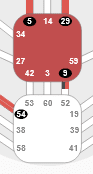
Those are what we call “Centers”, and they are essentially big “information hubs”, each with a specific function.
(Btw, the numbers inside are called “Gates”, and the lines connecting them are “Channels.”)
For example, the Head Center is associated with inspiration, curiosity, and the mental pressure to make sense of things, while the Emotional Center governs–you guessed it!–all things related to Feeling Our Feelings (yuck).
There are multiple ways to categorize the Centers, but the most useful one for beginners is their Definition.
In the simplest of terms:
- Defined Centers = colored in = what is consistent/reliable in your chart, what feels like “you”, how you influence other people
- Undefined Centers = white = where you are susceptible to conditioning (influence) from other people, what feels inconsistent
For example, someone with a Defined G-Center (also called “Identity Center”) often has a fixed, reliable sense of self.
On the other hand, if you have an Undefined G-Center, your identity and direction may feel impossible to pin down (extremely frustrating if you’re trying to grow a personal brand, btw).
Research this if: You want to stop trying to force yourself into routines, habits, or ways of being that work for other people but feel absolutely alien to you.
(^^ If I could have every therapist on this planet learn about a single piece of Human Design, it would be this one.)
Your Definition
Remember the Centers = information hubs analogy from earlier?
Your Definition shows us how you process that information.
Are you a largely self-contained person who moves through things alone, or do you need other people to noodle on things with?
Can you talk things out with just one person, or do you need to spend some time in a public place to really “get” something?
That’s what your Definition is here to tell you.

You can have the following types of Definition:
- Single
- Split
- Simple/small split
- Wide/large split
- Triple Split
- Quadruple Split
- No definition (Reflectors only)
Your Definition can also be one of the strongest conditioning forces in your chart (sometimes even more important than your Undefined Centers).
Research this if: You want to know how you process information + why you keep attracting a specific type of person into your life (hint: you might have Split Definition).
Your Conscious Sun Gate
See this thing on the right side of your chart?

That number is what we call a “Gate”, specifically your Conscious Sun Gate (or “Personality Sun Gate”, depending on the software you use).
It accounts for 70% (!) of the energy in your chart–which makes it kiiiind of a big deal.
It might be the part of the chart that feels the most “you” (unless it’s located in an Undefined Center–which might make it feel less consistent/accessible).
It is also the foundation of your Incarnation Cross (a.k.a. your purpose).
Research this if: You want to feel seen + understand an important energy pattern that shapes the rest of your chart.
Your Channels
Channels are the energetic pathways that connect your Defined Centers.
If your Defined Centers establish a foundation of what’s “you” in your chart, your Channels go one layer deeper.
Each Channel carries a particular theme that tends to show up in your life in the shape of specific behavior patterns, gifts, and challenges.
For example, the Channel of Preservation (27-50) is designed to “nurture, care, teach & transmit the values needed for the next generation of the tribe.”
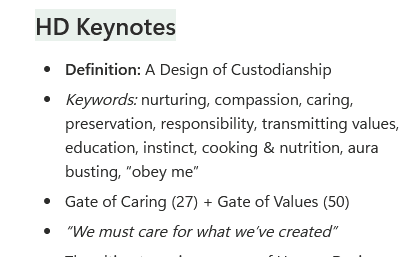
A little sneak peek from my personal Channel Library 👀
People who have this Channel often feel a very high level of responsibility for whoever they consider to be “their” people.
Because of it, they are often drawn to roles in education (especially early childhood education), therapy, and social work.
Research this if: You want to know more about your specific gifts & talents OR if you are not sure about Human Design and want to see if it’s “the real deal” or not.
2 Advanced Human Design Concepts to Explore
Your Incarnation Cross
In Human Design, your Incarnation Cross = your purpose. Kind of.
Your Incarnation Cross is made up of your:
- Conscious (Personality) Sun Gate
- Conscious (Personality) Earth Gate
- Unconscious (Design) Sun Gate
- Unconscious (Design) Earth Gate

It can help you answer questions like “so what the heck am I here to do?” and “why does stuff like this keep happening to me??”
If you would like to explore your Incarnation Cross more deeply, I would recommend:
- Looking up the short & sweet definition inside The Definitive Book of Human Design
- Looking up the details inside The Global Incarnation Cross Index
- Looking up your specific variation inside Incarnation Crosses by Profile
… In that order.
Those last two books will be a pretty dense read; if you’d like a lighter approach, The Book of Destinies by Chetan Parkyn offers more easily digestible interpretations for complete beginners.
Research this if: The question of “what’s my purpose” feels important for you to answer right now. Combine with research into your Profile for best results.
Your Environment + Digestion Variables
Alright, alright, I told you to run if you saw the word “substructure” mentioned anywhere… And you will see if it, you start researching Human Design Variables…
But they are just so dang USEFUL I couldn’t help myself. 😄
There are 4 Variables total; however, the two that have always felt the most accessible to me have been: the Environment Variable and the Digestion Variable.
These variables are represented by the bottom + top arrows on the LEFT side of your chart (the Design/Unconscious/red side):
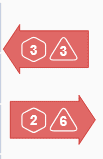
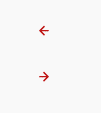
Your Environment Variable (bottom left) tells you what kind of physical spaces will bring out the best in you.
Your Determination Variable (top left) tells you how your body is designed to process food and information.
(If I had known this while studying for my LSATs… Ah, well. We might not be having this conversation if I had.)
Unfortunately, many free chart generators don’t give you Variable information at all.
Try the free chart on Neutruno Design App if you’re curious about yours.
Research this if: You want to learn how to support your body + your nervous system using Human Design… Or impress your friends with the greatest party trick of all time.
(Seriously. Telling a client about their Environment and seeing their eyes go wide in recognition always makes me giggle.)
The Traditional + In-Depth Approach to Learning Human Design
Perfect for you if: You enjoy structured learning experiences and don’t mind investing big $$$ in your Human Design education right off the bat.
Don’t feel like furiously Googling things all by your lonesome? That’s cool.
This is the learning path I would take if I wanted to do things “by the book”:
Step 1: Read The Definitive Book of Human Design to familiarize yourself with the lingo of Human Design.
Step 2: Take the Living Your Design course with IHDS to deepen your understanding of the above.
Step 3: Follow it up with Rave ABCs & Rave Cartography, also by IHDS.
Step 4: Pick & choose from Jovian Archive’s mini courses if a particular concept strikes your fancy and you want to know more about it ASAP.
(Optional) Step 5: Take IHDS’s Professional Analyst Training Program to go from “I understand my own chart pretty well” to “I can comfortably tell other people about theirs.”
Et voilà! Pretty simple, as long as you don’t find the cost too prohibitive.
That said, I would recommend trying a course or two from each of these organizations before committing your wallet to the entire thing; their teaching styles are not for everyone.
(This is also where you will probably encounter the more dogmatic, “my way or the highway” approaches to Human Design… So keep your wits about you, yeah?)
Which Human Design Sources Can You Trust As A Beginner?
Even though I don’t think there are any “wrong” ways to learn Human Design, I want you to be discerning about the information you’re consuming + where it’s coming from.
Most people (myself included!) are introduced to Human Design through what’s called “pop HD”: a simplified, watered-down version of the system that’s built for algorithms, not transformation.
If you are called to learn about the OG system of Human Design, I would strongly urge you to incorporate materials from the Jovian Archive (the original home of the Human Design system) and the International School of Human Design (founded by Ra himself) into your learning path.
Knowing what the original transmission sounds like will give you the ability to spot inconsistencies in people’s approaches + make informed decisions about who to engage with.
Note: IHDS & Jovian are not perfect. Keep an eye out for any dogmatic, inflexible language in their learning materials, and, for the love of your chosen deity, IGNORE it.
Personally, I LOVE some of the alchemical interpretations that have emerged from Ra’s original teachings (looking at you, Gene Keys 👀).
I *also* think the so-called “pop HD” has value, at least as a rite of passage for people entering the Human Design world. (Ra’s lectures aren’t exactly made for popularizing the system. #sorrynotsorry)
That said, I believe there is something magical about hearing the original language of Human Design–something that seems to get “lost in translation” when practitioners attempt to make it their own too early in their experiment.
^^ If this nuanced + source-based approach to Human Design resonates with you, consider this your sign to book a Human Design reading with me.
When to Get a Professional Human Design Reading as a Beginner
Short answer: when your intuition tells you to + when you have the financial resources to do so. 😊
The truth is, Human Design is not a simple system to learn. Like, at all.
Even if you read all the books I recommend in this article, and spend hours Googling things about your chart, it may take you years to see the connections between all the things you’re learning.
A professional Human Design analyst (hi, it’s me 👋🏻) can help you pull those pieces together much quicker.
On a personal note, my first Human Design reading was an absolutely magical experience. I hope you get to meet a reader who will pull your chart together for you the same way my reader did for me.
(Btw, while we’re on the subject… This is my pitch for why that reader should be me.)
An Invitation to Respond To–In Your Own Time
Your Human Design Type is just the beginning. There are hundreds of little nuances that make up someone’s chart, and it can take years of study to begin to see the subtle, yet important, connections between them.
If you’re intrigued by the Human Design system, consider this your official invitation to book a 90-minute Foundational Reading with me.
During our session, I will introduce you to the most important elements of your Human Design chart (think: e.g, your Human Design Profile) while also touching on a few more “advanced” subjects you might be curious about (e.g., your Incarnation Cross).
You’ll walk away with a solid understanding of your unique Design + plenty of avenues for further exploration and experimentation.